Balance is the invisible foundation of everything you do. Walking to the mailbox, stepping over the threshold of the shower, reaching for a glass on the top shelf — every one of these movements depends on a system of signals and corrections happening beneath your awareness, dozens of times per second.
Most people never think about their balance until something disrupts it. A near-miss at the top of the stairs. A stumble on an uneven sidewalk. Or worse — a fall that lands them in the emergency room.
As a Doctor of Physical Therapy with 19 years of experience working with older adults, I want to give you two things this post: a clear-eyed picture of what’s actually at stake, and the encouraging truth that balance is trainable — at any age, at any starting point.
The Scale of the Problem: Fall Statistics for Older Adults
Falls among older adults are not a niche concern. They are one of the leading causes of injury, hospitalization, loss of independence, and death in this population — and the numbers are getting worse, not better.
| 1 in 4 adults 65+ fall each year | 38,000 fall deaths in 2021 | $80B annual healthcare cost of falls | 2× increased fall risk after first fall |
Between 2003 and 2023, fall death rates among older adults rose dramatically — with adults 85 and older seeing their mortality rates more than double. In 2021 alone, falls caused approximately 3 million emergency department visits. The $80 billion annual healthcare cost of non-fatal falls represents a 60% increase from just five years prior.
And the consequences of a single fall can cascade quickly. Falling once doubles the risk of falling again. About 37% of people who fall sustain an injury requiring medical attention or activity restriction. Roughly 10% of falls result in fractures. Hip fractures are among the most serious outcomes — 83% of hip fracture deaths and 88% of hip fracture emergency visits are caused by falls.
| 📊 Research Note: Perhaps the most underappreciated statistic: fear of falling — even without having experienced a fall — is itself a significant risk factor. Fear triggers activity restriction, which causes deconditioning, which worsens balance, which increases actual fall risk. The cycle compounds quietly until the fall eventually happens. |
How Balance Works — and Why It Changes with Age
Balance is not a single ability. It is the product of five systems working together in real time:
The vestibular system (inner ear): detects head position and movement, providing the brain with spatial orientation information.
Vision: provides information about your environment, obstacles, and ground surface changes.
Proprioception: specialized receptors in muscles, tendons, and joints continuously report body position and movement to the brain.
The musculoskeletal system: leg and core muscles must be strong enough to support your body and fast enough to correct a destabilizing movement before a fall occurs.
Cognitive processing: the brain must integrate all incoming sensory information and coordinate the appropriate muscular response — rapidly and often while simultaneously doing something else.
With age, all five of these systems undergo changes. Muscle mass and reaction speed decline. Vision and vestibular sensitivity diminish. Proprioceptive accuracy decreases. And the cognitive load of maintaining balance while walking and talking — or walking and looking around — increases. Research has consistently identified reduced muscle strength, gait impairments, and balance problems as the three most common risk factors for falls in older adults.
| 💡 PT Tip: An important and often-missed connection: people with hearing loss are nearly three times more likely to fall than those with normal hearing — and wearing hearing aids can reduce fall risk by approximately 50%. If hearing loss is present, addressing it is a meaningful component of fall prevention. |
The Hidden Consequences of Poor Balance
The most visible consequence of poor balance is falling. But the downstream effects are worth understanding separately, because they often begin well before any fall occurs.
Fear of falling. Many older adults reduce their activity level in response to feeling unsteady — even after near-misses rather than actual falls. This fear is well-intentioned and understandable, but its long-term effect is to accelerate the very decline it’s trying to prevent.
Physical deconditioning. Less activity means weaker muscles, reduced cardiovascular fitness, and further balance deterioration. The cycle is self-reinforcing and can progress from mild caution to significant functional limitation over months or years.
Social isolation and depression. When seniors stop attending community events, visiting friends, or engaging in hobbies because they’re worried about falling, the social and psychological costs are substantial. Research links fall-related activity restriction to increased rates of depression and accelerated cognitive decline.
Loss of independence. As confidence and physical ability decline together, previously independent older adults begin needing help with tasks they once managed easily — a shift that affects both quality of life and self-concept.
Cognitive effects. Research shows that dual-task performance — maintaining balance while simultaneously performing a cognitive task, like walking and talking — becomes significantly more demanding with age. The relationship between balance and brain health runs in both directions: poor balance predicts cognitive decline, and cognitive training can improve balance.
Why Older Adults Fall: Intrinsic and Extrinsic Risk Factors
Most falls result from a combination of factors — not a single cause. The more risk factors present, the greater the cumulative fall risk. The critical insight is that many of these factors are modifiable.
Intrinsic Risk Factors (Within the Person)
- Medications: sedatives, sleep aids, antidepressants, blood pressure medications, and diuretics are among those most associated with increased fall risk
- Muscle weakness and deconditioning: the most directly modifiable risk factor through exercise
- Chronic conditions: diabetes, arthritis, Parkinson’s disease, and history of stroke all affect sensation, movement, and balance
- Vision impairment: uncorrected refractive errors, cataracts, and glaucoma reduce the visual information needed for balance
- Hearing loss: nearly triples fall risk; hearing aids can reduce this risk by approximately half
- Vitamin D deficiency: associated with muscle weakness and impaired neuromuscular function
- Cardiovascular issues: orthostatic hypotension (dizziness when standing) is a significant and often-missed fall trigger
- Fear of falling: itself a risk factor through activity restriction and protective muscle guarding that paradoxically reduces balance quality
Extrinsic Risk Factors (In the Environment)
- Poor or insufficient lighting, especially on stairs and in hallways
- Loose rugs, cluttered floors, or uneven surfaces
- Lack of grab bars in bathroom areas
- Slippery floors — wet surfaces, hardwood, and tile without non-slip mats
- Furniture placement that creates narrow pathways
- Pets underfoot, particularly small dogs and cats
- Outdoor hazards: uneven walkways, wet leaves, ice, and poorly maintained steps
| ⚠️ Fall Warning Sign: Falls most commonly occur during walking — often caused by incorrect weight shifts, loss of balance when changing direction, or not seeing a tripping hazard. The bathroom is the single highest-risk room in the home. Most falls happen at home, during ordinary daily activities. |
The Good News: Balance Is Trainable at Any Age
Here is what I tell every patient who comes to me worried about falling: balance is not fixed. It is trainable. And research backs this up consistently — balance training significantly improves balance performance, reduces fall risk, and enhances quality of life in older adults, including those in their 80s and 90s.
| 📊 Research Note: A comprehensive meta-analysis found that the most effective balance training programs involve approximately 11 to 12 weeks of training, three sessions per week, 31 to 45 minutes per session. Effective programs progressively increase difficulty and incorporate static balance (standing still), dynamic balance (moving), dual-task training (balancing while performing another activity), and exercises that challenge the base of support or reduce visual input. |
The benefits of balance training extend beyond fall prevention alone. Research documents improvements in walking speed, reduced fear of falling, increased confidence in daily activities, better physical function, improved quality of life, and cognitive benefits related to attention and executive function.
Progress can happen quickly. One study found balance robustness improved by 33% after a single training session — though meaningful, durable improvement develops over multiple sessions. Many people notice a difference within two to four weeks of consistent practice.
Effective Balance Exercises for Seniors
Below are the exercise types with the strongest research support for older adults. A physical therapist can assess your current balance and create a program tailored to your specific needs and starting point.
Static Balance Exercises
These build the foundational ability to maintain stability while standing still.
- Single-leg stance: stand on one foot for 10 to 30 seconds, using a counter for support as needed. Progress by reducing hand contact from two hands to fingertips to no hands.
- Tandem stance: stand with one foot directly in front of the other (heel to toe) and hold for 10 to 30 seconds. Progress to eyes closed once stable.
- Narrow stance: stand with feet together, arms crossed, for 30 seconds. Gradually reduce base of support over time.
Dynamic Balance Exercises
These train balance during movement — which is when most falls actually occur.
- Heel-to-toe walking (tandem gait): walk forward placing each foot directly in front of the other along a line. Use a wall or hallway for safety initially.
- Sideways walking: step laterally for 10 steps, then return. Builds hip abductor strength critical for balance recovery.
- Obstacle walking: set up low objects (towels, small books) to step over, training the body to navigate uneven environments.
- Sit to stand: rising from a chair without using hands builds the leg strength and movement control that prevents falls during transfers.
Tai Chi
Tai chi is among the most well-researched balance interventions for older adults. Its slow, flowing movements train weight shifting, body awareness, and coordination simultaneously. Multiple high-quality studies show tai chi reduces fall frequency, improves balance confidence, and provides significant psychological benefits. It is accessible to most fitness levels and can be done in a class, at home, or with video guidance.
Dual-Task Training
Balance while doing something else is the real-world challenge. Dual-task exercises train this directly: walking while counting backward by threes, standing on one foot while reciting the months of the year, or carrying a cup of water while navigating the room. These exercises improve the cognitive-motor integration that everyday balance demands.
Yoga and Chair Yoga
Yoga improves balance, strength, flexibility, and body awareness simultaneously. Chair yoga makes these benefits accessible to anyone who cannot safely perform standing balance exercises. See our chair exercise guide for a full overview of seated options.
| 💡 PT Tip: Even once-weekly supervised balance training has been shown to help prevent age-related decline in mobility and muscle strength when continued consistently over time. Frequency matters — but so does consistency. A modest program you sustain long-term outperforms an intensive program you abandon. |
A Comprehensive Action Plan for Better Balance
Improving balance is not just about doing exercises. It involves addressing the full range of risk factors simultaneously.
Get a fall risk assessment. Ask your physician about the CDC’s STEADI (Stopping Elderly Accidents, Deaths, and Injuries) initiative — a standardized screening tool that identifies specific risk factors and guides evidence-based intervention. Don’t wait until after a fall to have this conversation.
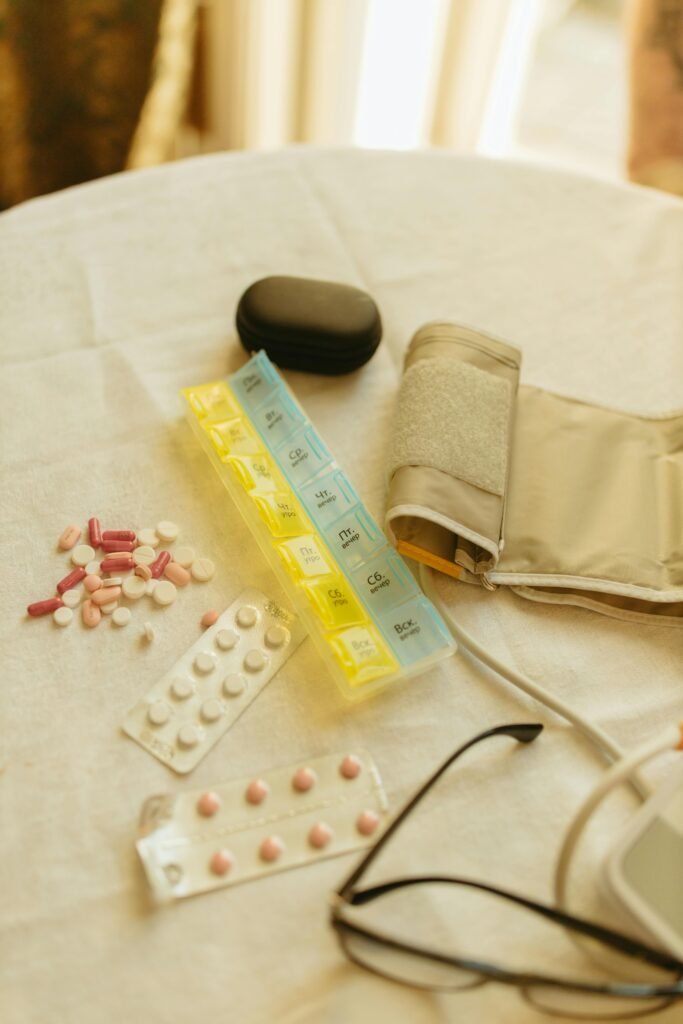
Review your medications. Discuss with your physician or pharmacist whether any current medications affect balance, cause dizziness, or impair reaction time. Alternatives may be available, or doses may be adjustable.
Address vision and hearing. Schedule a current eye exam and update glasses as needed. If hearing loss is present, discuss hearing aids — the 50% fall-risk reduction is a strong clinical argument for them.
Check your vitamin D levels. Vitamin D deficiency is common in older adults and contributes to muscle weakness and fall risk. A simple blood test and supplementation if deficient is low-cost, low-risk intervention.
Modify your home environment. Install grab bars in the shower and near the toilet, secure loose rugs or remove them, improve lighting in stairways and hallways, clear clutter from walking paths, and wear non-slip footwear indoors. See our aging-in-place home safety checklist for a complete room-by-room guide.
Work with a physical therapist. A PT can assess your specific balance impairments, identify which systems are most compromised, and design a targeted program. Medicare covers physical therapy for fall risk and balance problems when medically indicated.
Stay physically active. General physical activity — particularly strength training — preserves the muscle mass and reaction speed that balance depends on. See our strength training guide for a beginner program designed for older adults.