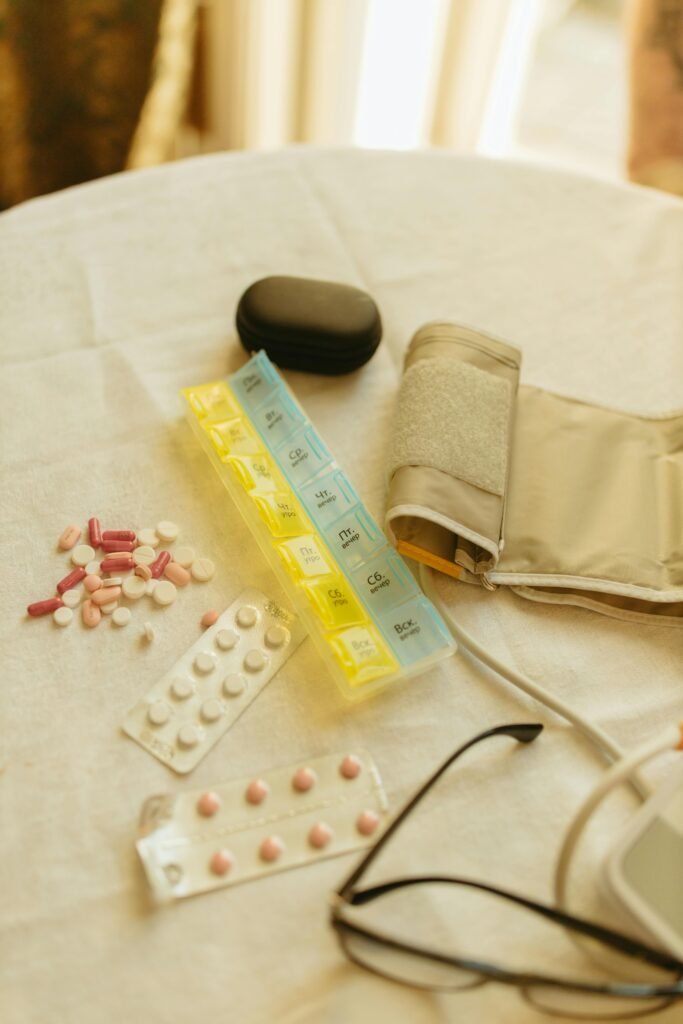
If you open your medicine cabinet right now, chances are you’ll find at least one expired pill bottle or a half-finished prescription from a few years ago. For older adults managing multiple conditions, unused medications can quietly pile up — and that clutter can be genuinely dangerous.
As a Doctor of Physical Therapy with 19 years of experience working with seniors and people with chronic conditions, I’ve seen firsthand how accumulated medications create confusion, increase fall risk, and pose real safety hazards at home. Research confirms the scale of the problem: 42% of adults ages 65 and older take five or more medications monthly, making older adults especially likely to accumulate unused or expired drugs over time.
What makes it worse is that nearly 4 in 10 Americans don’t know how to safely get rid of unused medications — so they toss them in the trash or flush them down the drain without realizing the risks. This guide will walk you through exactly why proper medication disposal matters and the safest, most responsible ways to do it.
Why Safely Disposing of Old Medications Matters
Accidental Poisoning in Children and Pets
Approximately 35,000 emergency department visits happen each year from unintentional medication overdose in children under 5 — and over 90% of those cases involve a child accessing medicine without a caregiver present. Poison control centers receive more than 450,000 calls annually about young children accidentally ingesting medication.
Medications that seem mild to an adult can be fatal to a small child or a pet. Even a single dose of certain opioids or cardiac medications can cause death if ingested by the wrong person.
Medication Errors and Fall Risk in Older Adults
For older adults already managing several prescriptions, keeping expired or discontinued drugs in the same cabinet as current medications is a recipe for dangerous mix-ups. Polypharmacy — taking multiple medications — is already linked to higher rates of falls, ER visits, and hospitalizations. Adding outdated medications to the equation makes it worse, especially for anyone dealing with cognitive changes or vision impairment.
Clearing out old medications simplifies your routine, reduces the chance of taking the wrong pill, and makes it easier for caregivers to help safely.
Misuse and Diversion
A 2018 survey of older adults prescribed opioids found that 49% had leftover pills — and 86% held onto them “for later use.” Those pills sitting in a nightstand or bathroom cabinet can become a target for misuse by others in the home, or they can accidentally end up in the wrong hands when thrown in the trash.
Reduced Effectiveness of Expired Medications
Medications don’t just become less effective after their expiration date — some can actually break down into compounds that cause unexpected side effects. Relying on an expired drug when you need therapeutic results is a risk not worth taking.
Environmental Impact
Flushing medications down the drain or toilet contributes to pharmaceutical contamination in water systems. While the body’s natural elimination of drugs already introduces some pharmaceuticals into the environment, improper disposal adds to that burden unnecessarily.
When Should You Dispose of Medications?
Make medication disposal a regular habit, not just a one-time cleanup. You should safely get rid of medications when:
- The expiration date has passed
- Your doctor has changed your prescription or dosage
- A course of antibiotics or short-term treatment is complete and pills remain
- You stopped a medication due to side effects or intolerance
- A condition has resolved and the medication is no longer needed
- Medications were stored improperly (e.g., exposed to excessive heat or moisture)
Pro tip: Coordinate your medication cabinet review with the DEA’s National Drug Take-Back Days in April and October each year. Use those dates as your biannual reminder to clear out anything that no longer belongs.
The Safest Ways to Dispose of Old Medications
Option 1: Drug Take-Back Programs (Best Choice)
The gold standard for medication disposal is a DEA-authorized drug take-back location. There are over 14,000 permanent collection sites across the United States, including:
- Retail pharmacy chains (many major chains have secure drop-off kiosks)
- Hospital-based collection programs
- Local police stations
- Community health departments
These kiosks accept tablets, capsules, and patches — no questions asked. They’re typically available during regular pharmacy hours and are monitored for security. Note: most sites do not accept syringes or sharps; liquid medications should remain sealed in their original containers.
To find a location near you, visit www.fda.gov/drugdisposal or search by ZIP code at safe.pharmacy/drug-disposal.
Option 2: National Drug Take-Back Days
Twice a year — typically in April and October — the DEA hosts National Drug Take-Back events at locations nationwide. These events are free, confidential, and accept both prescription and over-the-counter medications. The most recent event collected nearly 500 tons of pharmaceuticals from communities across the country.
Option 3: Mail-Back Programs
Some pharmacies offer pre-addressed, prepaid mail-back envelopes for safe medication disposal. Ask your pharmacist if this option is available — it’s especially convenient for those who have difficulty traveling to a drop-off site.
Option 4: Medication Deactivation Pouches
Products like DisposeRx offer at-home deactivation pouches containing activated charcoal. When mixed with water and added to a pill bottle, the contents are rendered into a biodegradable gel that is safe to discard in the household trash. Ask your pharmacist if these are available.
Option 5: Household Trash (When No Other Option Is Available)
If none of the above options are accessible, here is the FDA-recommended method for disposing of most medications in your household trash:
- Mix medications with an unpleasant, inedible substance such as dirt, cat litter, used coffee grounds, or salt. Do not crush tablets or capsules.
- Seal the mixture in a container — a zip-lock bag, a plastic tub, or a coffee can with a lid works well.
- Remove or black out all personal information from the prescription label before discarding the bottle.
- Place the sealed container in your household trash as close to collection day as possible.
Special Exception: The FDA Flush List
A small number of medications are so dangerous — particularly those with high misuse or overdose potential, such as certain opioids — that the FDA recommends flushing them immediately if no take-back option is available. These medications on the FDA “flush list” carry a risk of serious harm or death even from a single dose in the wrong hands.
One example: used fentanyl patches should be folded sticky-side-in and flushed immediately, as they still contain potent medication after use. To view the current flush list, visit www.fda.gov or ask your pharmacist.
Important: Never flush medications that are not on the FDA flush list. Routine flushing contributes unnecessarily to water contamination.
Special Disposal Considerations
Sharps and Needles
Used sharps — needles, syringes, lancets — must never go in the household trash or recycling bin. Place used sharps immediately in an FDA-cleared sharps disposal container. If you don’t have one, a heavy-duty plastic bottle with a tight-fitting cap (like a laundry detergent jug) can be used in a pinch. Contact your local pharmacy, health department, or doctor’s office to find an approved sharps drop-off in your area.
Inhalers and Aerosol Products
Asthma inhalers and aerosol medications can be hazardous if punctured or incinerated. Check the labeling for disposal instructions, and contact your local pharmacy or waste facility about accepted disposal options. Some pharmacies offer inhaler recycling programs.
Mercury and Iodine-Containing Products
Items such as certain thermometers or iodine-based products require special handling. Contact your local city or county hazardous waste recycling center for guidance.
A Note for Caregivers
If you assist an older adult with medication management, safe disposal is an important part of your role. After any doctor’s appointment, hospital discharge, or prescription change, take a few minutes to review the full medication list together and set aside anything that is no longer current.
Keep a simple log of what was disposed of and when — this can prevent confusion and serves as a useful reference if questions arise later. Store medications awaiting disposal in a secure, locked location, clearly separated from current prescriptions.
Take Action This Week
You don’t need a major life event to justify clearing out your medicine cabinet. Set aside 15 minutes this week to do the following:
- Go through every medication in your home and check expiration dates
- Set aside anything expired, discontinued, or no longer needed
- Find your nearest drug take-back location using fda.gov/drugdisposal
- Safely dispose of medications using one of the methods above
- Set a calendar reminder to repeat this process in six months
Proper medication disposal protects you, your family, your community, and the environment. It’s a small action with real, far-reaching impact — and it only takes a few minutes to do right.